Posts

Mammals

Image

Californian Indian

Image
Introduction   Distribution of Californian Indians.member of any of the aboriginal North American peoples in the area roughly corresponding to California and the northern Baja California peninsula. Native peoples found in California were only generally circumscribed by the present state boundaries. Some of the peoples within these boundaries were culturally intimate with other areas neighbouring California. The Colorado River groups, such as the Mojave (Mohave) and Yuma, shared traditions with both the Southwest (Arizona and New Mexico) and southern California, whereas the peoples of the Sierra Nevada, such as the Washo , shared traditions with the Great Basin peoples. In northern California were to be found native traditions of the Northwest Coast; the remaining native groups occupied the greater part of California, and they represented indigenous cultural developments. A conservative estimate of the pre -Spanish population of Calif...

Maurya Empire

The Maurya period (c. 321–185 BC) The state of Indian architecture in the period between the Indus Valley civilization and the rise of the Maurya Empire is largely unknown since most work was done in such perishable material as wood or brick. Excavations at Rājgīr, Kauśāmbī, and other sites, however, testify to the existence of fortified cities with stūpas, monasteries, and temples of the type found at the later Maurya sites of Nagarī and Vidiśā; and there is evidence of the use of dressed stone in a palace excavated at Kauśāmbī. Considering the power of the Maurya Empire and the extensive territory it controlled, the architectural remains are remarkably few. The most important are stūpas (later enlarged) such as a famous example of Sānchi ; the ruins of a hall excavated at the site of Kumrāhar in Patna (ancient Pāṭaliputra), the capital city; and a series of rock-cut caves in the Barābar and Nāgārjunī Ḥills near Gayā, which are interesting because they preserve in the more permanen...

crocodile bird

Image
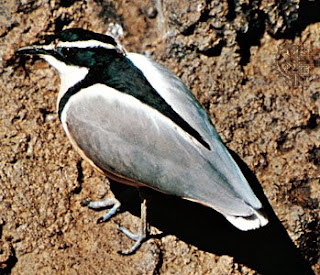
shorebird belonging to the family Glareolidae (order Charadriiformes ). The crocodile bird is a plover-like courser that derives its name from its frequent association with the Nile crocodile, from whose hide it picks parasites for food. By their cries, the birds also serve to warn crocodiles of approaching danger. They are also called black-backed coursers .

King of Saxony's bird-of-paradise

Image
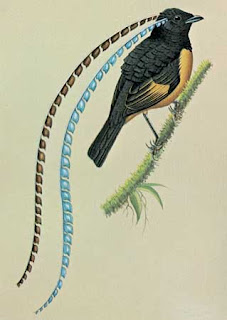
Birds-of-paradise occur in New Guinea highlands and on nearby islands; species called manucodes and riflebirds are found also in Australia. The largest manucode is the 45-centimetre (17 1/2-inch) curl-crested manucode (Manucodia comrii). The trumpetbird (Phonygammus keraudrenii) is 25 to 32 cm (10 to 12 1/2 in.) long and has head tufts as well as pointed neck feathers. It is named for the male's loud call. Others having special names include sicklebills and standardwings. Among the most notable birds-of-paradise are the plumebirds—the seven species of Paradisaea, 29 to 46 cm (11 1/2 to 18 in.) long. Their central tail feathers are elongated as wires or twisted narrow ribbons, and their filmy flank plumes can be raised and brought forward over the back, hiding the wings. The greater bird-of-paradise (P. apoda) has been introduced into the island of Little Tobago, in Trinidad and Tobago off the coast of Venezuela. The 12-wired bird-of-paradise (Seleucidis melanoleuca, sometimes S....

Dead Sea

Image
Arabic Al-Baḥr al-Mayyit , Hebrew Yam HaMelaẖ , also known as Salt Sea landlocked salt lake between Israel and Jordan, which lies some 1,300 feet (400 metres) below sea level—the lowest elevation and the lowest body of water on the surface of the Earth. Its eastern shore belongs to Jordan, and the southern half of its western shore belongs to Israel. The northern half of the western shore lies within the Palestinian West Bank and has been under Israeli occupation since the 1967 Arab-Israeli war. The Dead Sea lies between the hills of Judaea to the west and the Transjordanian plateaus to the east. The Jordan River flows from the north into the Dead Sea, which is 50 miles (80 km) long and attains a width of 11 miles (18 km). Its surface area is about 394 square miles (1,020 square km). The peninsula of Al-Lisān (Arabic: “The Tongue”) divides the lake on its eastern side into two unequal basins: the northern basin encompasses about three-fourths of the lake's total surface are...

Indian literature

Image
Sometime in the first half of the 2 ND millennium BC Aryan peoples from the northwest entered the Indian subcontinent and displaced the Indus Valley civilization of what is now Pakistan (see Indus Valley civilization). The language of the Aryans was Sanskrit, which eventually became the classic literary language of Hinduism, the leading religion of India. Since about 1400 BC India has had a continuous literature in Sanskrit, which still remains a sacred and learned language for Hindus. The impact of the early literature cannot be overestimated because it had such a powerful impact on later works. From about the 1st century AD there developed a literature in Tamil, which has also persisted in literary use until the present. Much later, from the 12 Th century on, literature's in several other languages appeared—in Hindi, Bengali, Assamese, Punjabi , and Urdu, among others. And from the 11 Th century an extensive Islamic literature, primarily in Persian and Urdu, developed as a...